Let’s Talk About Your Website
Consider your local favorite coffee shop. The proprietor, Maria, is familiar with her regulars. When she is in the morning, she sees that there is a bottleneck at the pastry case as everyone is bundled around it. She observes that the comfortable chair at the corner is in constant use. She listens to people demanding another type of oat milk.
Maria takes these observations to make her shop better. She takes the pastry case to a bigger space, introduces a second comfortable chair, and begins to fill the ordered oat milk. Her store works better and her clients are pleased.
Now, think about your website. Your visitors come noiselessly. You do not know where they get stuck, what they may be clicking and when they are leaving. It is like operating a store blindly.
It is at this point that data tracking comes in. It is the automat which switches the lights. Let us discuss the way data tracking can assist in enhancing the performance of the website. It is not about complicated technical jargons, but knowing your visitors in order to make their experience more enjoyable.
Data tracking can be reduced to simple concepts of ensuring that your site keeps a diary. It records the visitors, their activities and their origin.
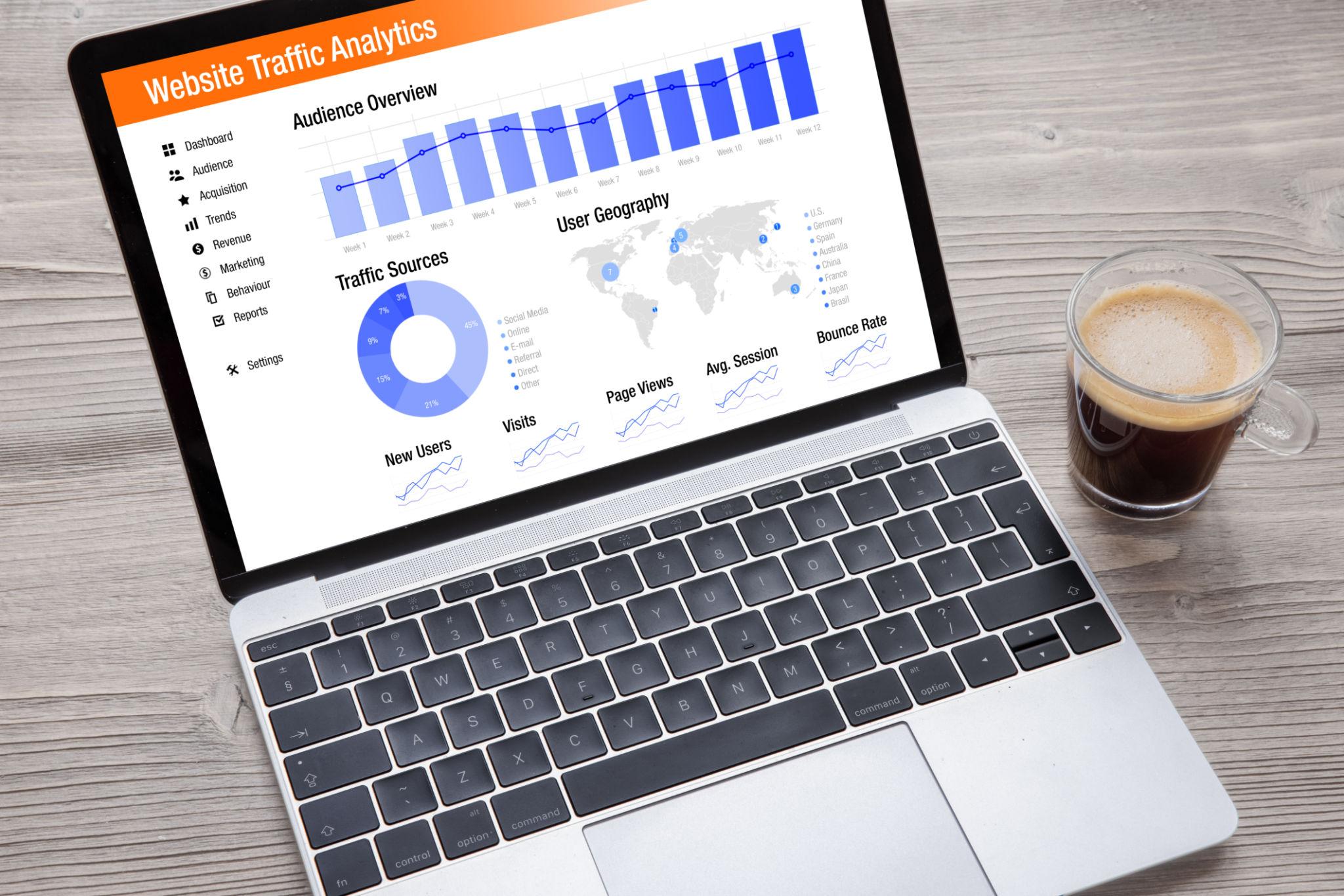
Consider such tools as Google analytics as such a diary. Some minute, unseen piece of code on your site records incidences such as:
This journal does not provide any names or biographies. Rather, it demonstrates to you patterns. It informs you, 70 percent of your visitors read this blog post, or are leaving this page almost instantly.
This is the initial move in comprehending the value of data tracking in enhancing the performance of the web sites. It is the conversion of the guesswork into knowledge.
You can’t help your visitors if you don’t know who they are. Data tracking paints a picture of your audience.
You’ll learn simple but powerful facts. Are most of your visitors using their phones? If so, you must ensure your site is easy to use on a small screen. Is a large portion of your traffic coming from a different country? Maybe you should consider their language or time zone when you publish new content.
When you know your audience’s habits, you can tailor the experience just for them. This direct insight is a fundamental way how data tracking helps improve website performance.
Your website has pages that are rockstars and others that need a little extra help. Data tracking helps you spot both.
Your Superstars: These are your most-visited pages. Maybe your “Beginner’s Guide to Gardening” blog post is a huge hit. That’s a clear signal! Your audience wants beginner-friendly gardening tips. You should definitely create more content like that.
Your Problem Children: These are pages with a “high bounce rate.” This is a fancy term for a page where people land and then leave quickly, without clicking anything else. A high bounce rate is your website’s way of raising a red flag. It’s saying, “Hey, something is wrong here! Maybe the page is confusing, the content isn’t what they expected, or the ‘Buy Now’ button is broken.”
By identifying these pages, you know exactly where to focus your improvement efforts. This targeted approach is a key part of how data tracking helps improve website performance.
We’ve all been there. You click a link, the page takes forever to load, and you get frustrated and hit the back button. You don’t want your visitors to feel that way.
Data tracking tools have features that monitor your site’s speed. They can tell you, “Your homepage loads in 1.5 seconds, which is great! But your product page takes 5 seconds, which is too slow.”
With this information, you can stop guessing and start fixing. You can compress images on the slow page, clean up the code, or talk to your hosting provider. A faster website is a happier website for everyone involved.
For most sites, the end goal is to get a visitor to take an action. This could be making a purchase, signing up for your newsletter, or downloading a guide. This action is called a “conversion.”
You can set up your data tracker to watch for these conversions. For example, you can mark the “Thank You for Your Order!” page as a conversion goal.
Once you do this, the magic happens. You can see:
Let’s say you see that 50 people add a product to their cart every day, but only 2 complete the purchase. The data shows they’re all leaving on the shipping information page. This is a giant clue! Maybe your shipping costs are a surprise, or the form is too long. Fix that page, and you could see a huge jump in sales. This is, without a doubt, the most powerful way how data tracking helps improve website performance and boosts your success.
Before data, website changes were often based on someone’s opinion. “I think a green button would look better than a blue one.” But why guess when you can know?
In data, simple A/B tests can be performed. You may display the green button to half the visitors and the blue button to the other half of the visitors. The statistics will be a clear indication of which one receives more clicks. You have the ability to test headlines, pictures and page arrangement. This eliminates the danger and allows your visitors to inform you on what they like.
Ultimately, the most intelligent thing you can do to your presence on the web is to accept the idea of data tracking as the means of enhancing the performance of your web page. It makes your site more than a brochure by making it dynamic and an active growing hub that works in your favor and that of your audience.
A: Responsible data tracking is concerned with group patterns, but not with individual spying. It’s anonymous and aggregate. It is a trademark to always have a clear privacy policy, and you are a good digital citizen.
A: Not at all! Such tools as Google Analytics are free and beginner-friendly. The first configuration is commonly nothing more than a copy-pasting of a code snippet. One can find loads of simple, no-money-required tutorials on the internet to get acquainted with the basics.
A: Begin with Users (number of people who came) and Bounce Rate (the rate of people who left fast). This provides you with a brief overview of the wellbeing of your site.
A: Absolutely! With a blog, it would be possible to see what your readers enjoy most, when they visit the site and what social media platform is sending you the most traffic. This will assist you in writing quality content and increasing your following.
A: Ads can boost good content, but you need the foundation first. An ad sending people to an empty or outdated page is a waste of money. Build a page with a dozen solid posts showing your work, then consider a small ad to promote your best project to people in your town. That’s how you make social media marketing for contractors in BC really work.